
Clinical Notes
Why XERF Uses Two Frequencies for RF Skin Tightening
A review of six XERF studies on 6.78 MHz and 2 MHz radiofrequency, treatment depth, and the limits of the available evidence.

Why does XERF use two frequencies? We review six studies on its 6.78 MHz and 2 MHz dual-frequency design, heat delivery, collagen changes, and periorbital use, and outline what to consider in actual treatment.
Why XERF Uses Two Frequencies for RF Skin Tightening
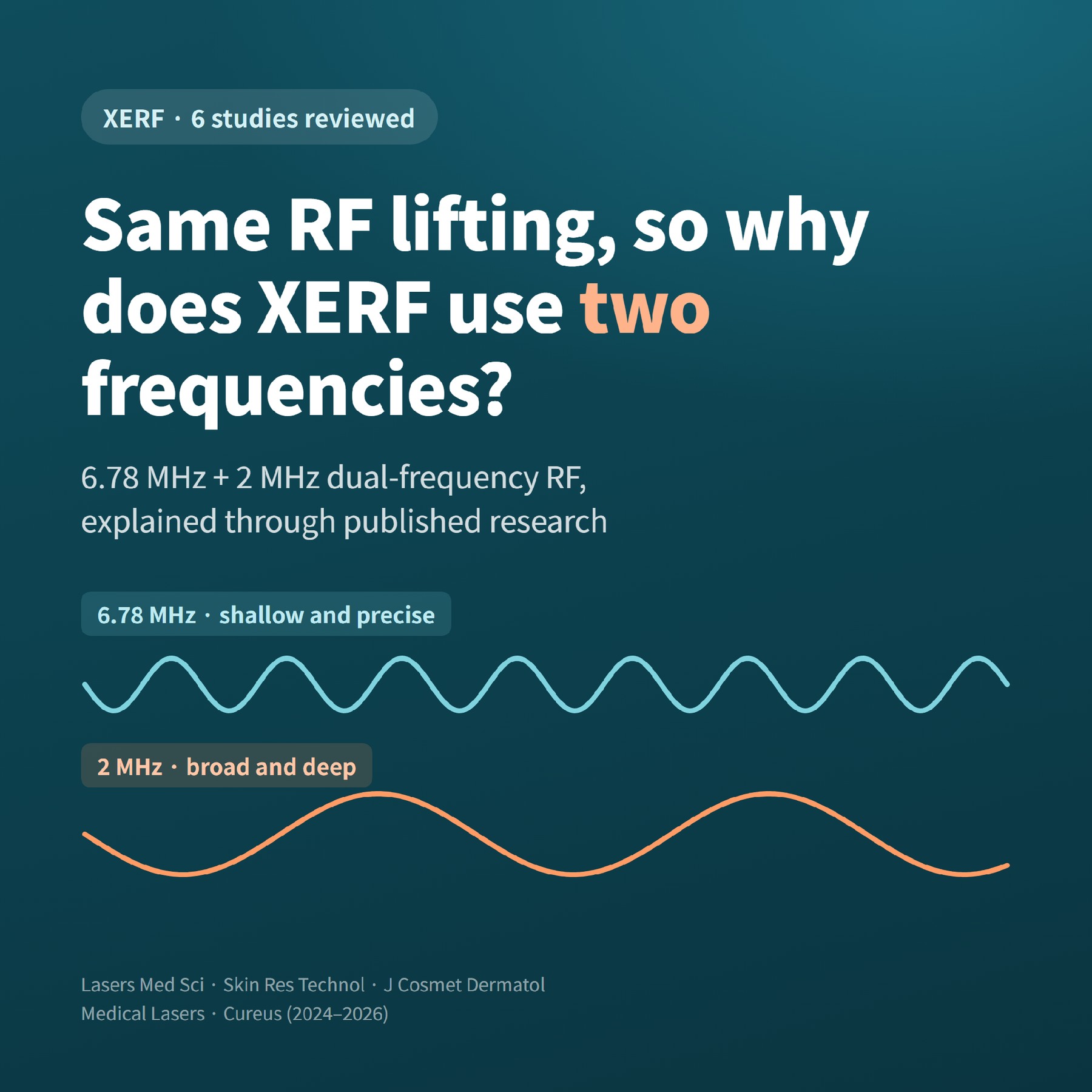
If you have been looking into radiofrequency (RF) skin tightening, you may have wondered:
“Don’t all RF treatments work in much the same way?”
They do share a basic principle. RF skin tightening delivers heat into the skin to induce changes in collagen.
XERF, however, uses a dual-frequency approach, adding 2 MHz to the 6.78 MHz frequency commonly used by conventional RF devices.
Can adding just one frequency really make a difference, or is it simply a different number?
In RF treatment, frequency is an important factor in determining how deeply heat reaches and how it spreads through the skin.
In this article, we review six XERF-related papers published between 2024 and 2026 to explore what difference dual-frequency treatment actually makes.
Six XERF Studies at a Glance
The papers covered in this article are listed below in order of publication.
- Paper and publication — Hong et al. (2024) · Skin Research and Technology
- Study method — Histological examination of porcine skin
- Key findings — At six hours, collagen bundles were shorter and thicker; fascia was thicker and displaced upward.
- Paper and publication — Park et al. (2024) · Journal of Cosmetic Dermatology
- Study method — Direct dermal temperature measurements in porcine skin
- Key findings — Dermis: 50–70 °C; skin surface: below 43 °C. Increased collagen density at 30 days without thermal damage.
- Paper and publication — Hwang (2025) · Medical Lasers
- Study method — Clinical study of 20 Korean women
- Key findings — At 12 weeks after one treatment: mean aesthetic improvement score 2.75/4; satisfaction 7.8/10; no unexpected adverse events.
- Paper and publication — Ko et al. (2025) · Lasers in Medical Science
- Study method — Computer simulation and minipig experiments
- Key findings — 2 MHz heated more broadly and deeply; 6.78 MHz heated along fibrous septa. Dual frequency produced the most pronounced changes, without fat-cell damage.
- Paper and publication — Hong et al. (2025) · Medical Lasers
- Study method — Direct comparison of 6.78 MHz and dual frequency in porcine skin
- Key findings — At one month, collagen bundle diameter was approximately 15 μm with 6.78 MHz versus 23 μm with dual frequency.
- Paper and publication — Erlich et al. (2026) · Cureus
- Study method — Technical report on periorbital treatment
- Key findings — Small E10/E5 tips combined with Deep mode. No complications other than mild redness.
Note: Four of the six papers are animal or simulation studies. Two involve humans: one clinical study and one technical report.
1. Understanding XERF and RF Skin Tightening
Monopolar RF skin tightening sends an electrical current from a treatment tip in contact with the skin toward a return pad attached to the body.
As the current encounters resistance within the tissue, it generates heat. This heat causes collagen in the dermis to contract immediately.
Over the following weeks and months, new collagen forms and reorganizes, leading to changes in skin firmness.
Monopolar RF devices of this kind first received US FDA authorization for treating facial wrinkles in 2002. Since then, most have used a single frequency of 6.78 MHz.
One key principle helps explain the difference.
In general, lower-frequency RF energy penetrates more deeply into the skin.
This means that 2 MHz can target deeper layers than 6.78 MHz.
Developed by Cynosure Lutronic, XERF offers Shallow and Middle modes that use 6.78 MHz alone, as well as a Deep mode that combines 6.78 MHz and 2 MHz.
So how do these two frequencies behave differently inside the skin?
2. How Heat Spreads at 6.78 MHz and 2 MHz
An interesting study sheds light on this question.
A 2025 study published in Lasers in Medical Science used computer simulations and minipig experiments to compare heat distribution at different frequencies.
At the same energy input, 2 MHz produced a broader and deeper distribution of heat than 6.78 MHz, with higher temperatures in the upper portion of the subcutaneous fat layer.
By contrast, 6.78 MHz concentrated heating along the fibrous septa—the collagen walls that divide subcutaneous fat into a network and support the skin from below.
The dual-frequency approach, which delivers both frequencies within a single pulse, produced the greatest temperature rise and reached the deepest tissue layers.
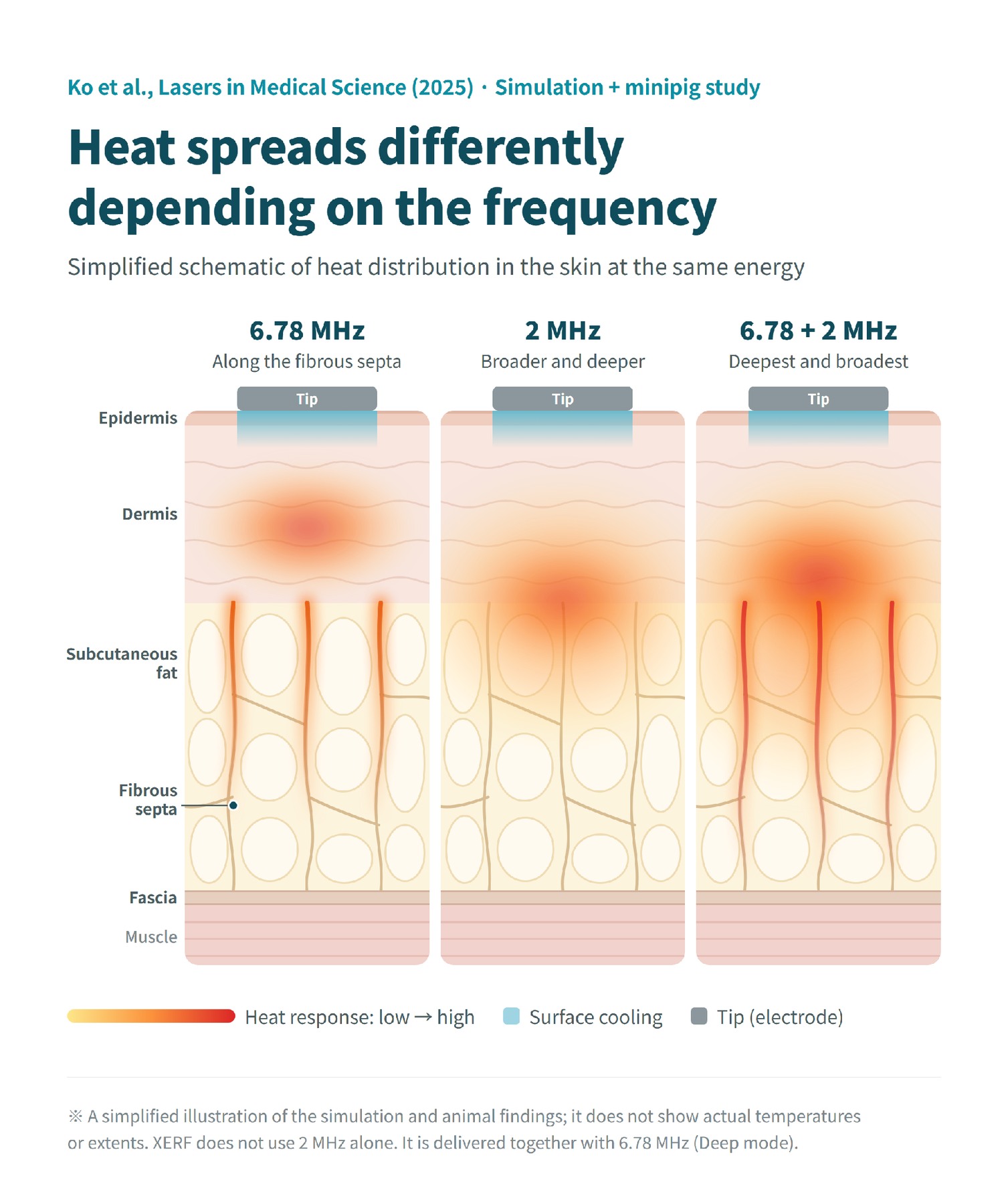
Simplified schematic comparing heat distribution in the skin by frequency, based on Ko et al. (2025).
A useful analogy is to think of 6.78 MHz as heating wires laid along a mesh, while 2 MHz works more like underfloor heating that warms a broader area and retains heat.
Similar findings were seen in minipig skin. Dual-frequency treatment produced the most pronounced changes in collagen and elastic fibers in the deep dermis, at the dermal–subcutaneous fat junction, and within the fibrous septa. These changes were more apparent on day 30 than on days 7 or 15.
Interestingly, although heat reached the fat layer, fat-cell structure remained intact, and no signs of fat-cell death were observed.
Does this mean that deeper-reaching dual-frequency treatment is always better?
Not necessarily.
The researchers suggested that the most appropriate approach depends on the condition of the skin.
- Feature — Device mode
- 6.78 MHz alone — Shallow and Middle
- 6.78 MHz + 2 MHz — Deep
- Feature — Heat distribution
- 6.78 MHz alone — Localized along fibrous septa
- 6.78 MHz + 2 MHz — Broader and deeper, with the greatest temperature rise
- Feature — Main target layers
- 6.78 MHz alone — Superficial to mid-dermis
- 6.78 MHz + 2 MHz — Deep dermis and subcutaneous tissue
- Feature — Suggested candidates in the study
- 6.78 MHz alone — Fine to moderate wrinkles; thin or average subcutaneous fat
- 6.78 MHz + 2 MHz — Deep wrinkles; thicker subcutaneous tissue
Because this study involved computer modeling and animal experiments, we cannot assume that human skin will show changes of the same magnitude.
Ultimately, what matters is not simply the number of frequencies, but where and how heat is delivered within your skin.
Reference: Ko K, et al. (2025). Computational modeling and histologic analysis of 6.78- and 2-MHz monopolar radiofrequency-induced thermal reactions. Lasers in Medical Science.
3. Tissue Changes After XERF Treatment
If heat reaches deeper layers, what changes actually occur in the tissue?
A study published in Skin Research and Technology in 2024 examined porcine skin six hours after a single dual-frequency RF treatment.
The researchers observed immediate changes: collagen bundles became shorter and thicker.
The superficial and deep fascia supporting the skin also appeared thicker and displaced upward. The researchers described these findings as previously unreported with conventional RF devices.
How does this compare with conventional treatment using 6.78 MHz alone?
A follow-up study published in Medical Lasers in 2025 directly compared 6.78 MHz alone with dual-frequency treatment in the same porcine model.
Six hours after treatment, both approaches produced shorter, thicker collagen bundles. However, changes in the deep dermis and fibrous septa were more pronounced with dual-frequency treatment.
One month later, collagen in the dual-frequency group was more densely and regularly arranged, and elastic-fiber staining was stronger.
The difference becomes clearer when comparing collagen bundle thickness.
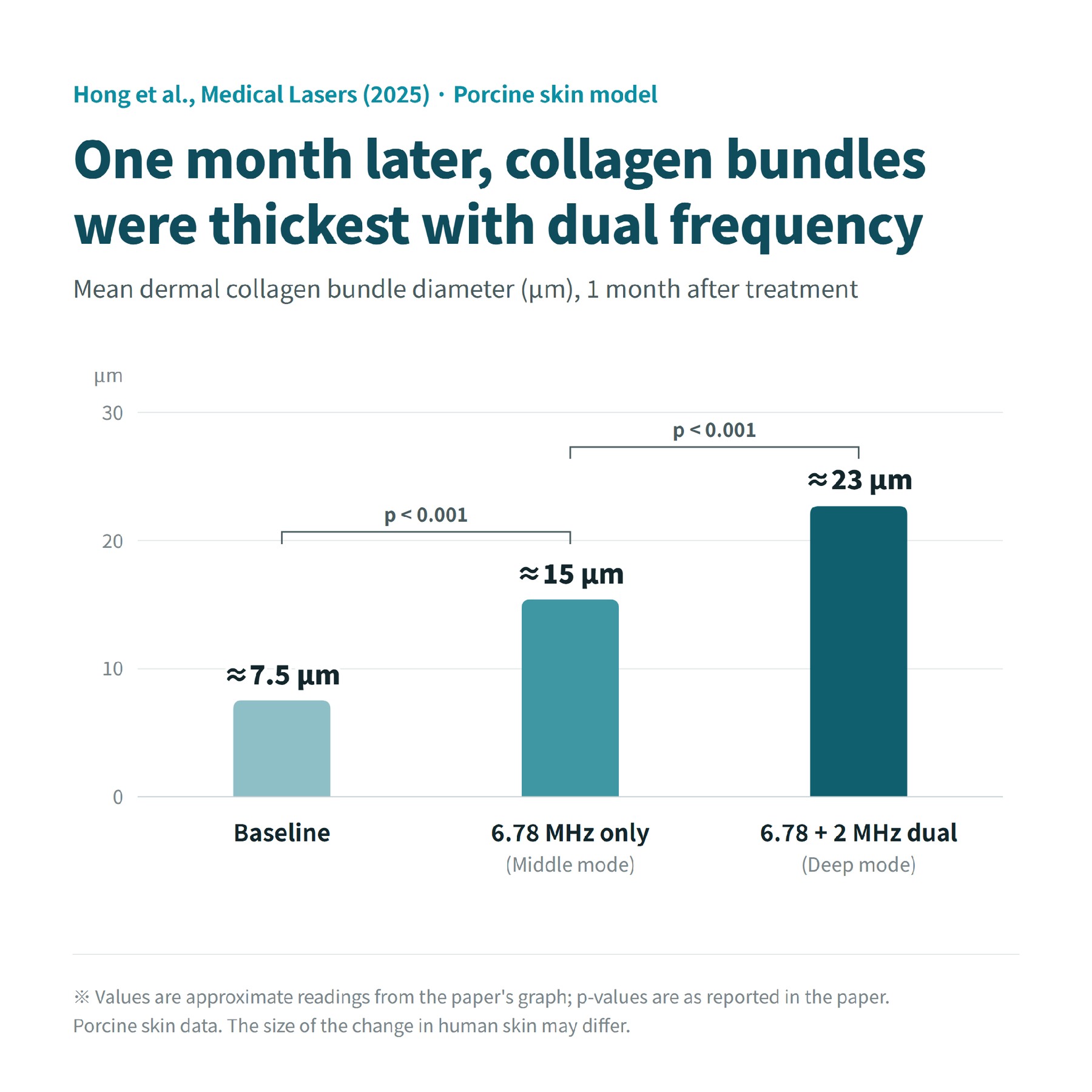
Dermal collagen bundle diameter one month after treatment (Hong et al., 2025; porcine skin model).
Based on the graph in the paper, collagen bundle diameter increased from approximately 7.5 μm at baseline to about 15 μm with 6.78 MHz alone and about 23 μm with dual-frequency treatment. The difference was statistically significant.
The researchers suggested that heating the fat layer with 2 MHz may create a kind of “heat reservoir.” They also proposed that a pulse structure that raises the temperature gradually, rather than abruptly, may help reduce localized overheating.
Both studies, however, used porcine skin, which differs from human skin in thickness and structure. These differences should be kept in mind.
Reference: Hong J, et al. (2024). Efficacy of dual-frequency noninvasive monopolar radiofrequency in skin tightening: Histological evidence. Skin Research and Technology.
Reference: Hong J, et al. (2025). Safety and efficacy of a novel non-invasive monopolar radiofrequency device for skin tightening in a porcine model in Republic of Korea: pre-clinical study. Medical Lasers.
4. Deep Heating and Skin Surface Protection
At this point, you may be wondering:
“If the heat goes that deep, could the skin surface overheat or burn?”
A study published in the Journal of Cosmetic Dermatology in 2024 inserted fiber-optic temperature probes into the dermis of porcine skin to measure temperature in real time during treatment.
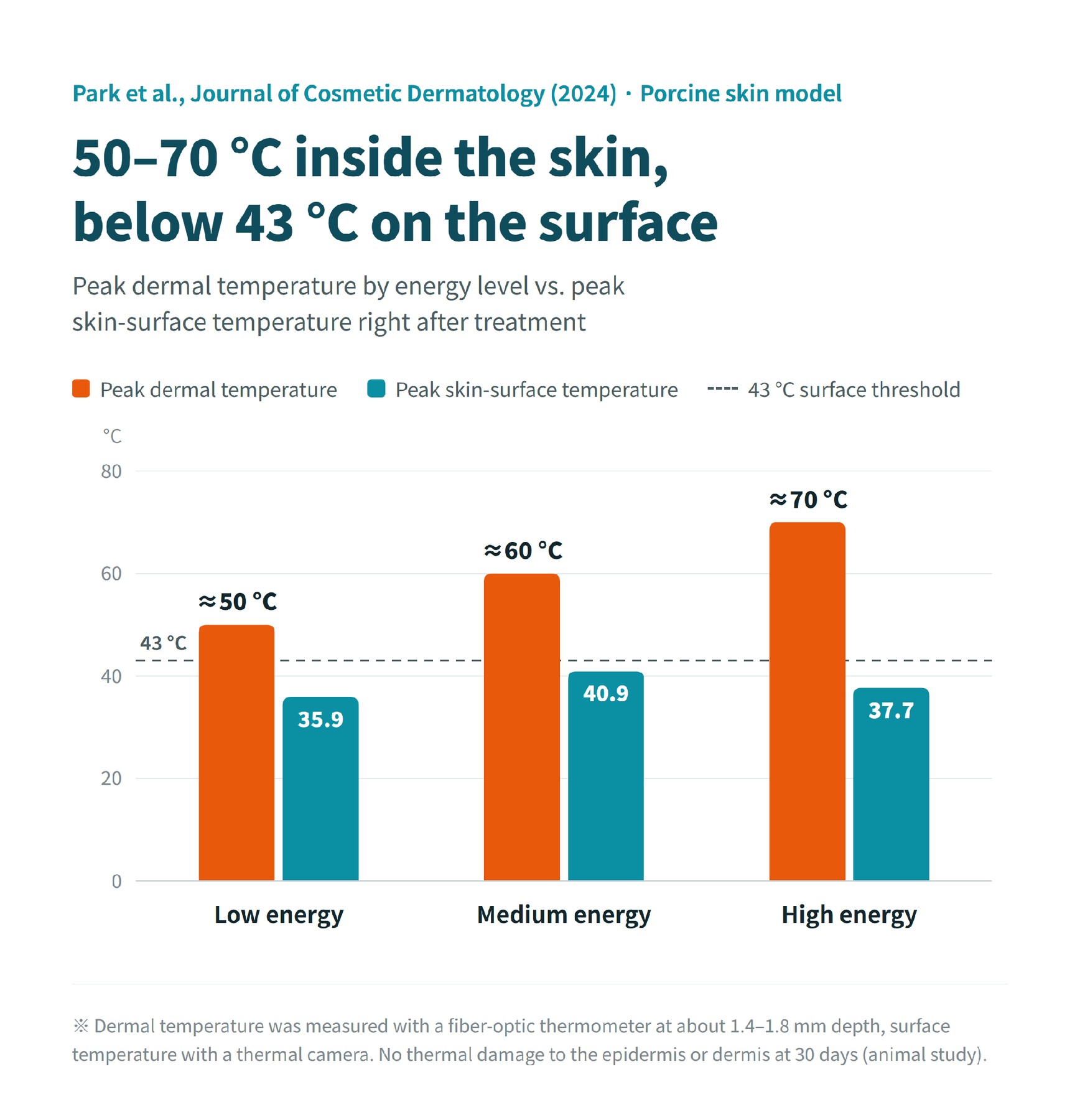
Intradermal and skin surface temperatures at different energy levels (Park et al., 2024; porcine skin model).
Depending on the energy level, dermal temperatures rose to approximately 50 °C, 60 °C, and 70 °C. However, peak skin surface temperatures immediately after treatment ranged from 35.9 °C to 40.9 °C, remaining below 43 °C in every case.
For context, collagen regeneration is described as occurring at approximately 42–65 °C, while skin surface temperatures should remain below approximately 42–45 °C to help prevent epidermal injury.
Histological examination 30 days after treatment showed no thermal damage to either the epidermis or dermis. Collagen thickness and density had increased.
In the 2025 Medical Lasers comparison study discussed earlier, skin surface temperatures immediately after treatment were also similar: 39.3 °C with 6.78 MHz alone and 39.0 °C with dual-frequency treatment.
These studies therefore found that XERF could heat tissue beneath the surface while keeping the skin surface below 43 °C.
These are still animal-study findings. In clinical practice, energy settings must be adjusted while monitoring the skin’s response.
Reference: Park C, et al. (2024). Monopolar radiofrequency for dermal temperature regulation and remodeling: A porcine model study. Journal of Cosmetic Dermatology.
5. Evidence from Treatment of the Human Face
Promising animal results are useful, but the main question is what changes have been observed in people.
A clinical study published in Medical Lasers in 2025 reviewed the records of 20 Korean women, aged 28–63, who received a single XERF treatment.
Treatment combined the 6.78 MHz mode targeting the middle depth with the dual-frequency mode targeting deeper layers. No topical anesthetic or pain medication was used.
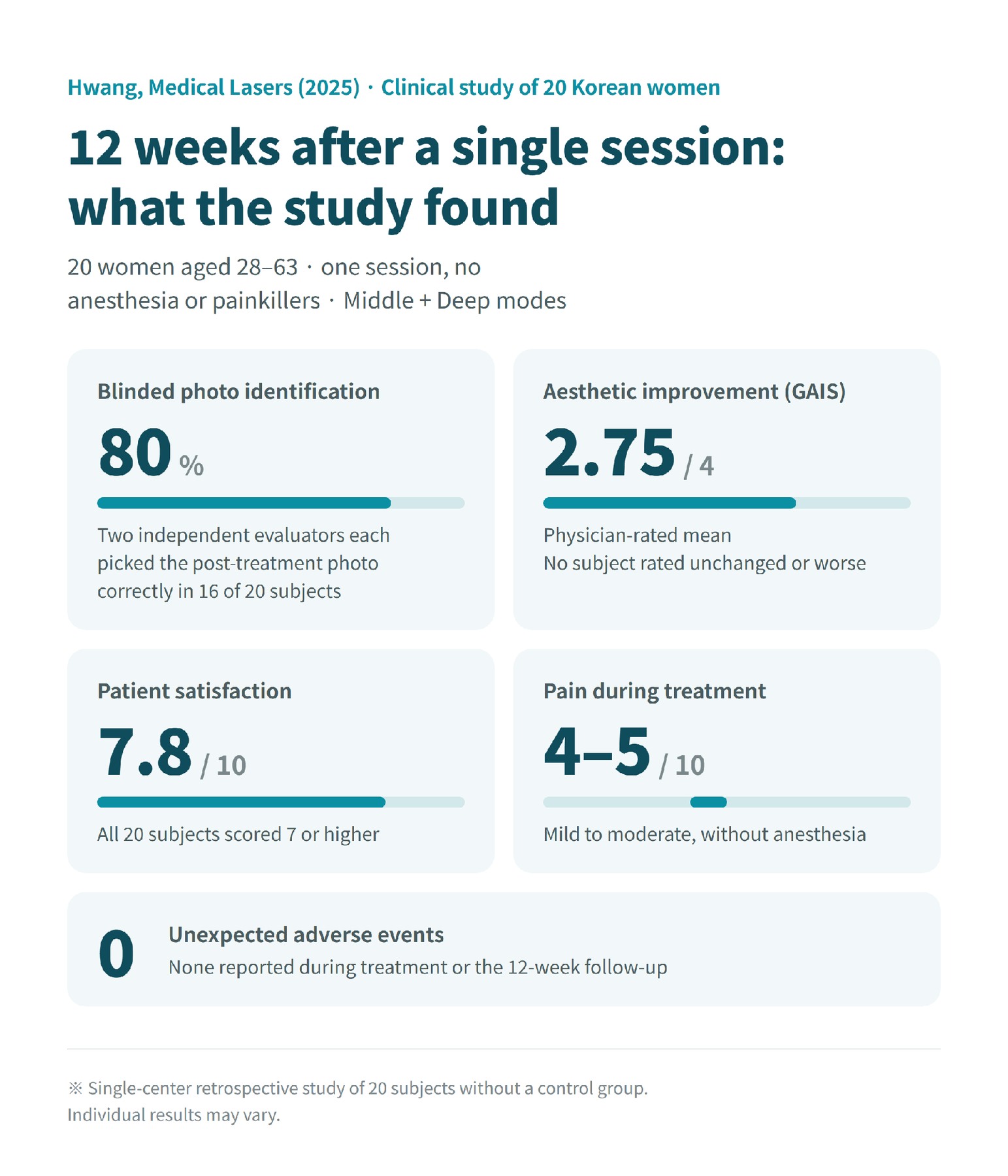
Results in 20 Korean women 12 weeks after a single XERF treatment (Hwang, 2025).
The outcomes at 12 weeks are summarized below.
- Outcome — Photo identification accuracy
- Result — 80%
- Assessment method — Two independent evaluators reviewed shuffled before-and-after photos and identified post-treatment images correctly in 16 of 20 cases each.
- Outcome — Global Aesthetic Improvement Scale (GAIS)
- Result — Mean 2.75/4
- Assessment method — Clinicians rated improvement in wrinkles, pores, texture, redness, and skin tone on a 0–4 scale. No participant was rated unchanged or worse.
- Outcome — Patient satisfaction
- Result — Mean 7.8/10
- Assessment method — All 20 participants scored at least 7.
- Outcome — Pain during treatment
- Result — 4–5/10
- Assessment method — Mild to moderate; no topical anesthetic or pain medication.
- Outcome — Unexpected adverse events
- Result — 0
- Assessment method — None reported during treatment or the 12-week follow-up.
The paper attributed the relatively manageable pain to the design of the device.
A temperature sensor inside the XERF tip automatically stops energy delivery if skin temperature exceeds 43 °C. Cooling gas is also sprayed onto the back of the tip to cool the epidermis.
Instead of delivering one strong pulse, the device builds heat through a series of shorter pulses. The authors interpreted this combination of cooling and multiple pulses as effective for pain control.
Can everyone expect the same results?
Not necessarily.
This was a single-center retrospective study involving 20 participants, with no control group. The paper identified possible selection bias as a limitation. It is also important to consider that the records came from a clinic affiliated with the manufacturer.
Reference: Hwang JK. (2025). Evaluation of the clinical safety and efficacy of a noninvasive dual-frequency monopolar radiofrequency device in the treatment of facial photoaging sequelae in Republic of Korea: a clinical study. Medical Lasers.
6. When Changes May Appear After XERF
One of the most common questions before treatment is, “When will I notice a difference?”
Arranging the study findings chronologically suggests two broad phases of change.
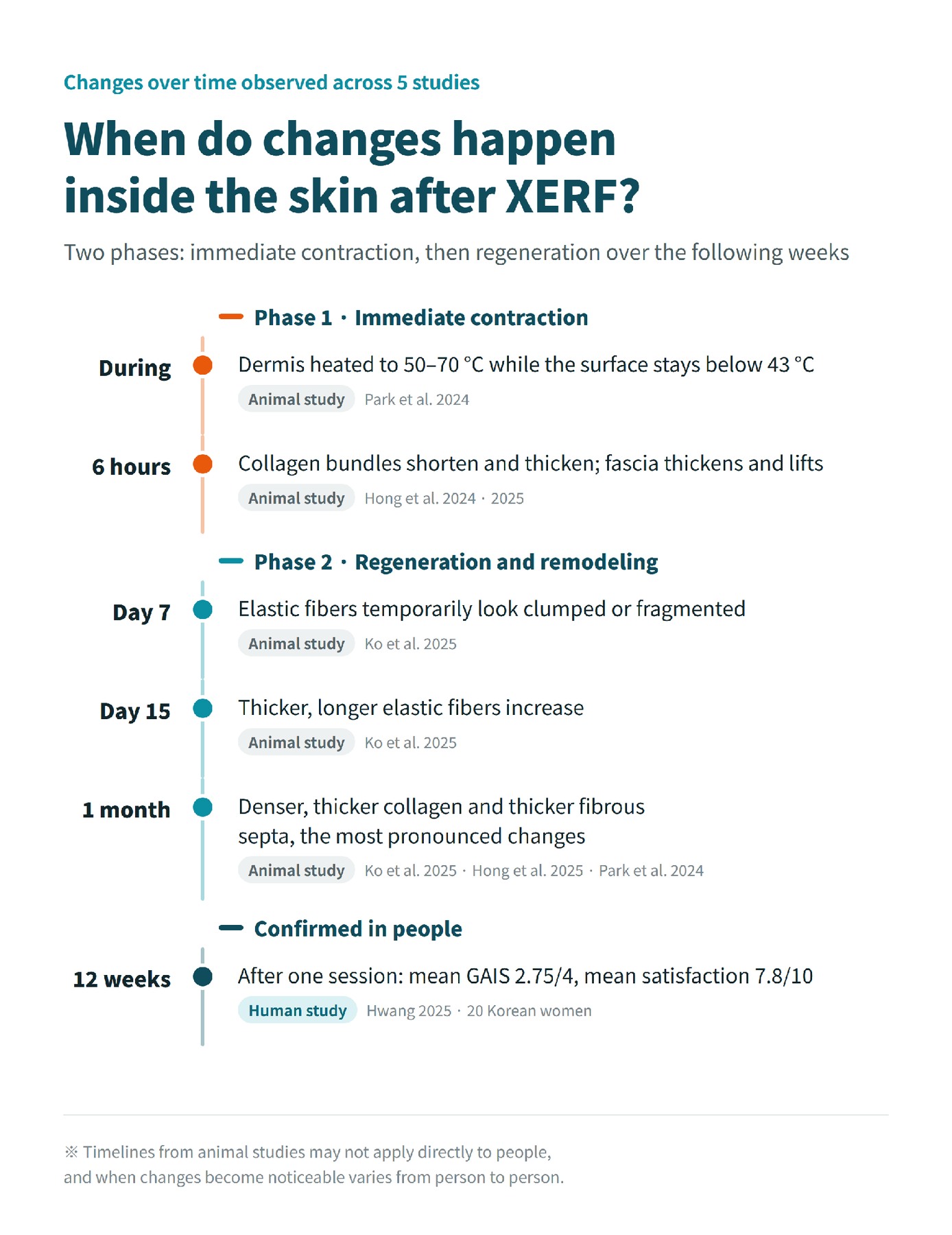
Tissue changes observed at different time points across the studies (four animal studies and one human study).
The first phase is immediate contraction. In porcine skin, collagen bundles were already shorter and thicker six hours after treatment.
The second phase is ongoing regeneration. In the minipig study, elastic fibers temporarily appeared clumped or fragmented on day 7. By days 15 and 30, thicker and longer fibers had increased, while collagen changes were most pronounced on day 30.
In the human study, improvement was assessed 12 weeks after a single treatment.
There is an important distinction that is easy to overlook.
The changes felt immediately after treatment are not the same as those that develop over time.
Immediate changes reflect collagen contraction, whereas regeneration involving the formation of new collagen and elastic fibers takes place over weeks to months.
Rather than judging the result solely by how the skin feels immediately afterward, it is important to allow time for these changes to develop.
7. Treatment Around the Delicate Eye Area
The contours of the bones around the eyes, along with the proximity to the eyes themselves, make it difficult to maintain full contact with a large treatment tip.
Simply making the tip smaller has its own limitation: current tends to concentrate more superficially, making it harder for heat to reach the deeper supporting tissues needed for lifting.
A technical report by an Israeli plastic surgery team, published in Cureus in 2026, introduced a technique combining XERF’s small E10 and E5 tips with the dual-frequency Deep mode to address this limitation.
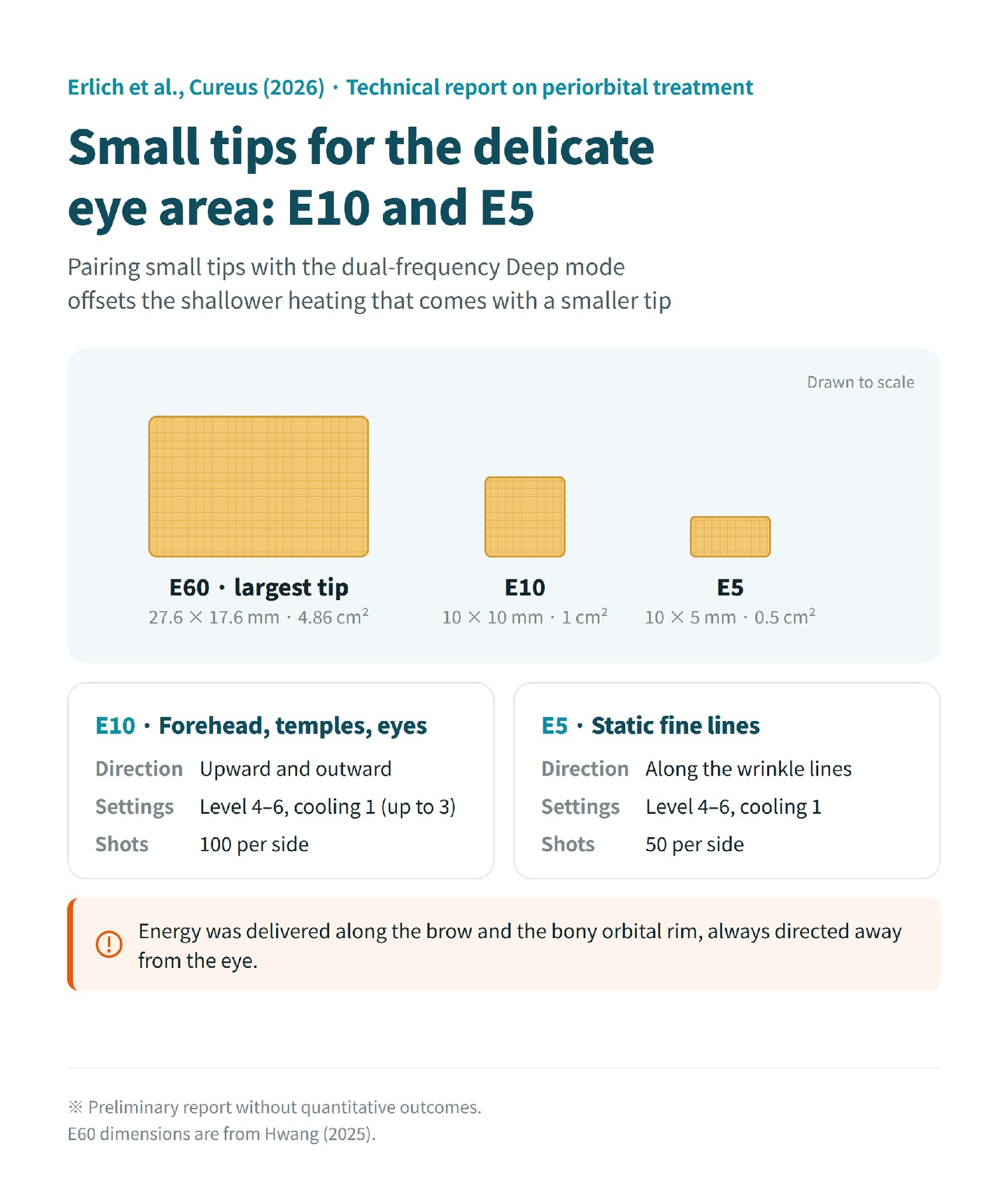
XERF tip sizes and the periorbital treatment technique using the small E10 and E5 tips (Erlich et al., 2026).
- Feature — Tip size
- E10 — 10 × 10 mm (1 cm²)
- E5 — 10 × 5 mm (0.5 cm²)
- Feature — Main treatment areas
- E10 — Forehead, temples, and around the eyes
- E5 — Fine lines visible even at rest
- Feature — Treatment direction
- E10 — Upward and outward
- E5 — Along the wrinkle lines
- Feature — Energy / cooling level
- E10 — 4–6 / 1 (3 if needed)
- E5 — 4–6 / 1
- Feature — Pulses per side
- E10 — 100
- E5 — 50
Energy was delivered along the area beneath the eyebrows and the bony orbital rim, with all treatment directions oriented outward, away from the eyes.
No complications had been observed in the treatments reported. Mild redness in some patients resolved spontaneously within a few hours. There was no swelling lasting more than 24 hours, and no burns or pigment changes.
Three-dimensional imaging at one and three months suggested improvements in brow position, upper eyelid sagging, and fine lines around the eyes.
However, this was a technical report introducing a treatment method. The authors explicitly described the findings as preliminary observations without quantitative data. Objective results are expected from an ongoing study, and the first author disclosed serving as an international trainer for the manufacturer.
Reference: Erlich G, et al. (2026). Dual-Frequency Non-invasive Monopolar Radiofrequency for Periorbital Tightening: Introduction of Novel Small Treatment Tips. Cureus.
8. Who Might Consider XERF
The findings from these papers can be summarized as follows.
- When XERF may be considered — Concerns about sagging cheeks, jawline definition, or laxity around the nasolabial folds, with a preference for nonsurgical treatment
- When careful assessment is needed — Implanted electronic devices, such as a pacemaker, defibrillator, or cochlear implant
- When XERF may be considered — Fine lines, uneven texture, and an overall loss of firmness
- When careful assessment is needed — Metal implants, such as fixation pins or artificial joints
- When XERF may be considered — Brow descent and upper eyelids beginning to feel heavy
- When careful assessment is needed — Pregnancy or breastfeeding
- When XERF may be considered — A need to return to daily activities quickly, with limited time for recovery
- When careful assessment is needed — Skin conditions at the treatment site, keloids, impaired wound healing, or factors affecting recovery such as diabetes, radiotherapy, or chemotherapy
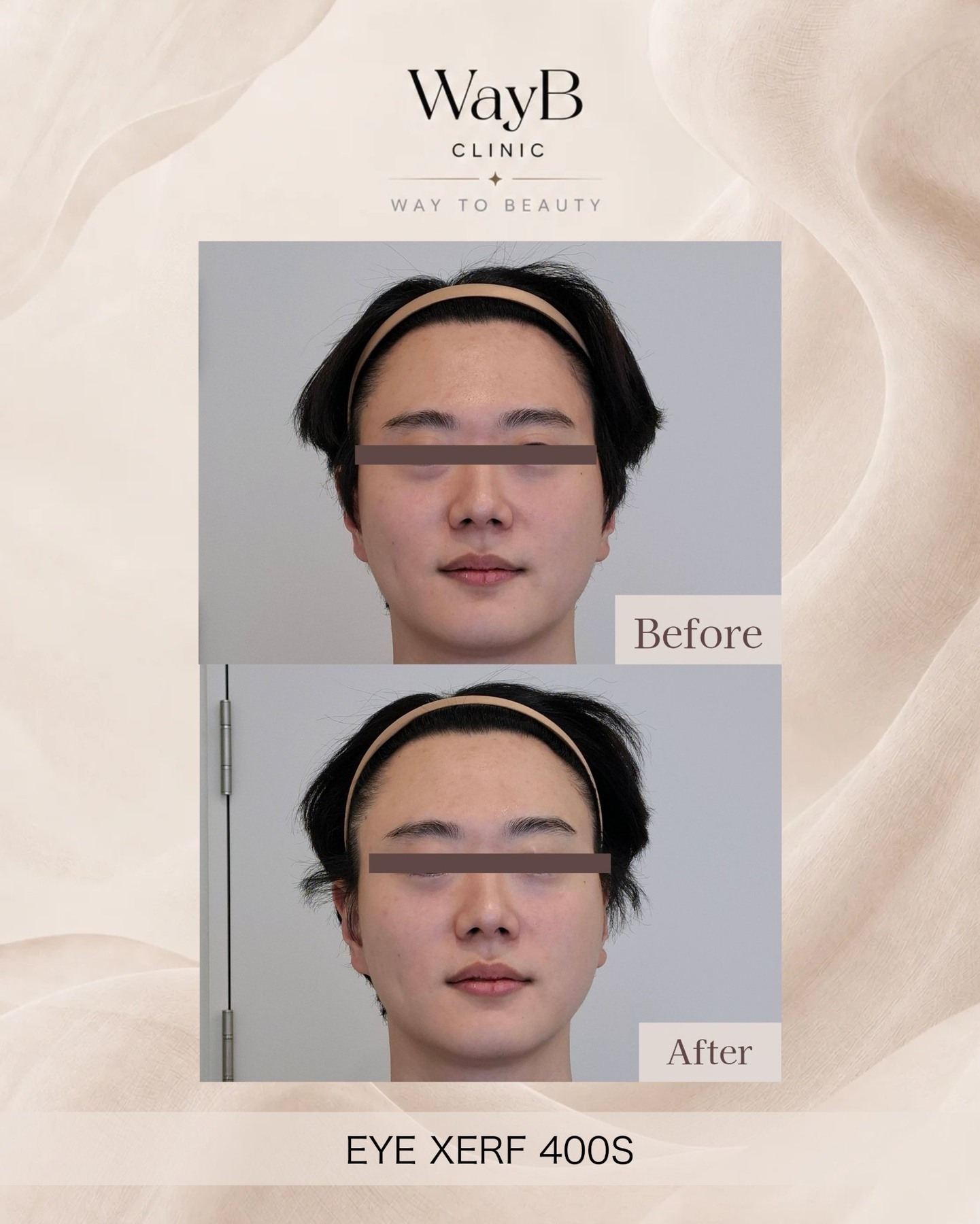
Let’s look at an actual treatment case.
Case — Upper Eyelid Firmness
Even with the same device, the mode and energy settings vary according to skin thickness, the degree of sagging, and the amount of subcutaneous fat. In this case, the upper eyelids were treated in Shallow mode at level 7, the brow area in Deep mode at level 7 for brow lifting, and the under-eye area in Deep mode at level 6. An immediate brow-lifting effect can be seen, along with increased firmness of the upper eyelids and skin.
9. Frequently Asked Questions About XERF
Q. What is XERF?
XERF is a noninvasive monopolar RF skin-tightening treatment that uses two frequencies: 6.78 MHz and 2 MHz. It delivers heat beneath the skin without incisions to induce collagen contraction and regeneration. Shallow, Middle, or Deep modes can be selected according to the condition of the skin.
Q. How does XERF differ from conventional RF skin tightening?
The main difference is its dual-frequency approach, which adds 2 MHz to the conventional 6.78 MHz frequency. Because lower frequencies reach deeper, combining the two can target the deep dermis and subcutaneous tissue. In a porcine skin study, dual-frequency treatment produced thicker collagen bundles after one month than 6.78 MHz alone.
Q. When will I start seeing results?
Collagen contraction begins immediately after treatment, while regeneration continues over weeks to months. In animal studies, collagen contraction was observed at six hours, and collagen and elastic-fiber regeneration was most pronounced at one month. The human study assessed improvement 12 weeks after a single treatment.
Q. How long do XERF results last?
The long-term durability of XERF results has not yet been studied sufficiently. Follow-up in the studies reviewed here extended to one month in the animal studies and 12 weeks in the human clinical study. The 2025 Medical Lasers paper cited clinical reports of improvement lasting up to six months after conventional monopolar RF treatment, while noting that longer studies are needed to establish long-term effects.
Q. Is XERF painful, and does it require anesthesia?
In the study, treatment was performed without topical anesthetic or pain medication. Pain was rated 4–5 out of 10, representing a mild to moderate level, and all 20 participants completed treatment. Pain sensitivity varies, so the use of topical anesthetic should be discussed during consultation.
Q. Could XERF cause hollowing in my cheeks?
Animal studies found that heat reached the fat layer without observed fat-cell damage. In minipig skin, fat-cell structure remained intact for up to 30 days after dual-frequency treatment, with no evidence of fat-cell death. A 2007 study of conventional monopolar RF treatment involving 290 patients also reported fat atrophy rarely, at a rate of 0.26% or less per treatment session. If cheek hollowing is a concern, ask for an assessment of your subcutaneous fat thickness during consultation.
Q. Can XERF be used around the eyes?
Yes. A periorbital technique using the small E10 and E5 tips with the dual-frequency Deep mode has been reported. Energy is directed along the area beneath the eyebrows and the bony orbital rim, outward and away from the eyes. However, this remains an early report without published quantitative outcomes.
Q. Does XERF have any side effects?
No unexpected adverse events were reported in the human study, but temporary redness, warmth, and swelling can occur. The periorbital report described only mild redness that resolved within hours. However, a 2007 study of conventional monopolar RF treatment involving 290 patients reported severe pain in 11.49% of treatment sessions, second-degree burns in 2.7%, and redness lasting more than 24 hours in 1.22%. Appropriate energy settings and experienced treatment delivery are therefore important.
Q. Can I return to my normal activities immediately after XERF?
As a noninvasive treatment, XERF generally involves a short recovery period, or downtime. In the periorbital report, mild redness resolved within hours, and no swelling lasted longer than 24 hours. For 48 hours after treatment, however, it is advisable to avoid hot showers, saunas, strenuous exercise, and irritating skincare products, while using moisturizer and sunscreen consistently.
Q. How many sessions will I need?
The clinical papers reviewed here reported outcomes after a single treatment. Evidence on repeat-treatment intervals remains limited, so the number and timing of sessions should be determined during consultation based on your skin condition and goals.
What the Additional Frequency Means in Practice
By adding 2 MHz to the conventional 6.78 MHz frequency, XERF expands the depth and distribution of RF heating.
Animal studies found collagen changes extending into the deep dermis, fibrous septa, and fascia. The human study reported improvement 12 weeks after a single treatment, with no unexpected adverse events.
However, many of the studies reviewed were animal experiments or small studies, and several involved the manufacturer. Larger studies with longer follow-up are still needed.
When choosing an RF treatment, the number of frequencies is not the most important factor.
What matters more is selecting the treatment depth and energy appropriate for your skin thickness and degree of sagging.
At WayB Clinic, we recommend treatment approaches based on each individual’s skin condition and facial structure.
This article provides general medical information. RF treatment may cause redness, warmth, swelling, or tingling. Rare complications include burns, scarring, and fat atrophy. Treatment suitability and results vary from person to person, so a thorough consultation with a medical professional is necessary.
Our Medical Directors
- Haebeom Koo, MD · Medical Director · Education · Graduated from Pusan National University School of Medicine · Experience · Former Medical Director, Pria Clinic · Former Medical Director, Dioré Clinic · Former Medical Director, Céramique Clinic · Former Medical Director, Daybeau Clinic Gangnam Premium · Former Medical Director, Daybeau Clinic Bundang · Professional activities · Full Member, ARAM Practical Aesthetic Medicine Study Group · Advisory Panel Member, MediBible · Full Member, Korean Society for the Study of Obesity and Aesthetic Treatment · Full Member, Korean Aesthetic Surgery and Laser Society · Key Opinion Leader (KOL), STYLAGE® dermal fillers · Languages Spoken: Korean, English
- Jisu Lee, MD · Medical Director · Education · Graduated from Chungbuk National University College of Medicine · Experience · Former Training Director, Daybeau Clinic Gangnam Premium · Former Medical Director, Xenia Clinic · Former Medical Director, Daybeau Clinic Gangnam Premium · Former Medical Director, velyB Clinic Hongdae · Former Training Director, Muse Clinic Gwangmyeong · Former Medical Director, Muse Clinic Gwangmyeong · Former Intern, Asan Medical Center · Professional activities · Steering Committee Member, ARAM Practical Aesthetic Medicine Study Group · Invited Lecturer in Fillers, MediBible · Full Member, Korean Society for the Study of Obesity and Aesthetic Treatment · Full Member, Korean Aesthetic Surgery and Laser Society · Key Opinion Leader (KOL), STYLAGE® dermal fillers · Certifications · HSK Level 5 (2012) · JLPT N2 (2024) · Languages Spoken: Korean, Chinese, Japanese, English