

Clinical Notes
How Many ONDA Lifting Sessions Are Needed?
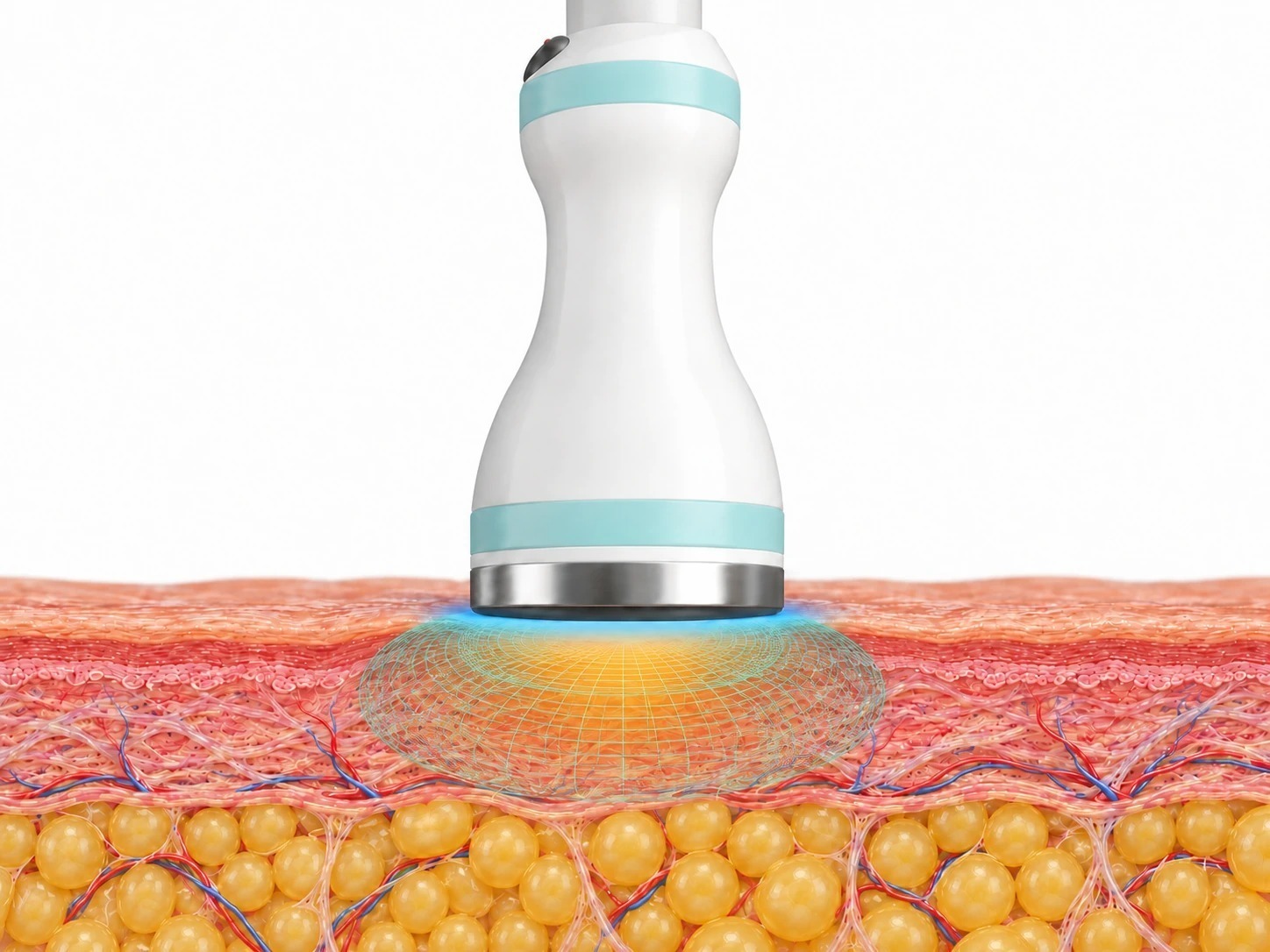
A review of clinical studies on ONDA session numbers, intervals, and when to assess results, plus how it differs from HIFU, the risks of skin injury and cheek hollowing, combination treatment, and aftercare for international patients returning home.
WayB Clinic
How Many ONDA Lifting Sessions Are Needed?
HIFU Results and the Risk of Skin Damage
International patients planning lifting treatments in Korea may wonder, “How many sessions can I have during a short stay?”, “How long will the results last?”, or “Could my cheeks become hollow or my skin be damaged?”
ONDA and HIFU are both energy-based, non-surgical treatments used to improve skin firmness, but they differ in their energy sources and how they act on tissue.
Before choosing a treatment, it is important to understand not only how the device works, but also your own skin thickness, fat volume, and the underlying causes of sagging.
At WayB Clinic, we have compiled answers to frequently asked questions about ONDA and HIFU based on published clinical studies and safety recommendations from professional medical societies.
1. What Is ONDA Lifting?
ONDA is a non-surgical device that uses 2.45 GHz microwave energy.
Depending on the treatment area and handpiece, it is used to target localized fat reduction and improved skin firmness.
A study published in the Journal of Cosmetic Dermatology in 2022 evaluated the potential of a microwave device to improve submental fat and skin laxity. The study reported improvements in scores assessing submental fat and skin laxity, along with generally good treatment tolerability.[1]
However, these findings cannot be applied equally to every facial area or every patient.
For ONDA treatments in particular, it is important to distinguish areas where fat reduction is needed from areas where natural volume should be preserved.
This is because appropriate treatment goals may differ between a patient with substantial submental fat and one whose cheeks already appear hollow.
2. How Many ONDA Lifting Sessions Are Needed to See Results?
Multiple ONDA sessions may be considered depending on the individual’s skin condition and treatment goals. Some clinical practices plan approximately three sessions at intervals of 3–4 weeks, but this should not be regarded as a standard schedule applicable to every patient.
In fact, treatment schedules have differed across published studies.
2022 Clinical Study
Forty-eight participants with submental fat and skin laxity received a total of six microwave treatments at two-week intervals. At the assessment 12 weeks after the final treatment, significant improvements in submental fat and skin laxity scores were observed.[1]
2025 Clinical Study
Ten women received two treatments approximately 30 days apart. At 12 weeks after the final treatment, the mean skin laxity assessment score improved from 3.6 to 2.3.[2]
- Category — Participants
- 2022 Study [1] — 48 participants with submental fat and skin laxity
- 2025 Study [2] — 10 women
- Category — Sessions and intervals
- 2022 Study [1] — 6 sessions, 2 weeks apart
- 2025 Study [2] — 2 sessions, approximately 30 days apart
- Category — Assessment time
- 2022 Study [1] — 12 weeks after the final treatment
- 2025 Study [2] — 12 weeks after the final treatment
- Category — Reported outcomes
- 2022 Study [1] — Improved submental fat and skin laxity scores
- 2025 Study [2] — Mean skin laxity score: 3.6 → 2.3
Table 1. Treatment schedules and assessment results from published ONDA clinical studies
As these studies used different numbers of sessions and treatment intervals, it is difficult to apply any one study’s schedule directly to every patient.
The number of sessions should be determined by considering fat volume, skin thickness, degree of laxity, treatment area, device used, and response to the first session.
For international patients, rather than trying to fit multiple sessions into a short stay, it is advisable to maintain appropriate intervals and make a plan to assess progress after returning home.
3. How Long Do ONDA Lifting Results Last?
ONDA results should be assessed not only from the appearance immediately after treatment but also by observing changes over the following weeks.
In studies of the submental area published in 2022 and 2025, improvements were confirmed 12 weeks after the final treatment.[1,2]
An important distinction, however, is that the time point at which results are assessed is not the same as the actual duration of those results.
Improvement observed at 12 weeks does not mean the effects last exactly 12 weeks. Conversely, long-term persistence beyond that point has not been sufficiently established.
The 2025 study, in particular, was small, with only 10 participants, and its follow-up period was limited for assessing long-term durability.[2]
Rather than assuming a uniform duration, it is more reasonable to compare the initial condition with post-treatment progress and consider weight changes and skin aging when deciding whether additional care is needed.
4. How Does HIFU Lifting Work?
HIFU stands for High-Intensity Focused Ultrasound.
Microfocused ultrasound (MFU), used for skin lifting, focuses energy at selected tissue depths to create small thermal coagulation points and subsequently promote collagen remodeling.[3]
While ONDA uses microwave energy, HIFU uses ultrasound energy.
HIFU results may vary depending on device characteristics, energy settings, treatment depth, and the individual’s tissue condition.
Not all HIFU devices have the same safety profile or clinical effectiveness.
Therefore, rather than focusing only on a device’s name or number of shots, it is important to have an assessment of whether the treatment is suitable for your skin and facial anatomy.
5. Can HIFU Treatments Damage the Skin?
Yes. HIFU can cause unintended tissue damage if excessive energy is delivered to an unsuitable area or depth.
In an official safety statement reaffirmed in 2025, the American Institute of Ultrasound in Medicine (AIUM) explained that HIFU and microfocused ultrasound may cause tissue injury if applied for excessive durations or directed at unintended anatomical structures.[3]
Possible reactions after treatment include temporary pain, redness, swelling, and numbness.
A systematic review published in Dermatologic Surgery in 2025 examined adverse events associated with microfocused ultrasound with visualization (MFU-V).
The review assessed data from 506 patients across 19 studies, with temporary swelling, redness, and pain reported most frequently.
Serious adverse events were rare in the academic literature, but cases of subcutaneous fat atrophy were identified. Reports in a medical-device adverse-event database also included fat atrophy, nerve-related symptoms, and scarring.[4]
However, adverse-event reports alone cannot establish actual incidence rates or confirm causality.
These findings do not mean that HIFU is dangerous for every patient; rather, they highlight the importance of appropriate patient selection and careful treatment planning.
6. How Can You Reduce the Risk of Hollow Cheeks After HIFU?
Facial lifting is not simply about tightening the skin or reducing fat.
For natural facial contours, it is necessary to consider both the tissues that need improvement and the volume that should be preserved.
Patients with little facial fat or existing hollow cheeks should be especially careful to avoid unwanted fat reduction.
The systematic review published in 2025 also identified cases associated with subcutaneous fat atrophy following microfocused ultrasound treatment.[4]
However, those findings cannot be generalized to the risk associated with every HIFU device or every patient.
Before treatment, it is useful to clarify the following:
- Which areas need fat reduction, and which areas should be preserved?
- What treatment depth is appropriate given my skin thickness and fat volume?
- Could my history of lifting treatments, liposuction, or fat grafting affect the treatment plan?
- How would hollow cheeks or sensory changes be assessed and managed if they occurred?
These questions can help support a safer, more individualized treatment plan.
7. Is Combining ONDA and HIFU More Effective?
Because ONDA and HIFU use different forms of energy, combining them may be considered depending on treatment goals.
For example, in a patient with both submental fat and skin laxity, each concern can be assessed separately before an appropriate treatment approach is selected.
However, combining the two treatments does not necessarily produce greater effects or longer-lasting results.
The currently available studies of the individual devices are not enough to conclude that combining ONDA and HIFU is superior for every patient.
In particular, patients with low facial volume or thin skin need carefully planned treatments to avoid unnecessary fat reduction.
The need for combination treatment should be determined by the patient’s actual skin condition and treatment goals, rather than by the number of devices used.
8. What International Patients Should Consider Before Lifting Treatments in Korea
International patients may have limited time in Korea and may find it difficult to return to the same clinician after going home.
Therefore, treatment planning should consider not only the procedure itself but also post-treatment care after returning home.
Before your visit, it is helpful to prepare information on areas of concern, previous procedures and surgeries, current medications, underlying medical conditions, and your itinerary in Korea.
A preliminary consultation using photographs can be helpful, but it cannot fully replace an in-person examination to assess actual skin thickness and tissue condition.
The AIUM also recommends that HIFU and microfocused ultrasound procedures be performed by medical professionals with appropriate qualifications and training.[3]
Before leaving Korea, it is important to receive guidance on expected recovery reactions, when to check progress, and how to contact the clinic if unusual symptoms occur.
In particular, blisters, changes in skin color, worsening pain, persistent or worsening sensory changes, or changes in facial movements should prompt timely medical evaluation.
9. WayB Clinic’s Approach to Natural-Looking Lifting Results
ONDA and HIFU are non-surgical treatments that may be considered for improving skin firmness and facial contours.
However, the same device, number of sessions, and energy settings are not suitable for every patient.
To plan for natural-looking results, three considerations are particularly important:
First, accurately assess whether the primary concern is excess fat or skin laxity.
Second, distinguish areas where fat reduction is needed from areas where volume should be preserved.
Third, understand not only the expected benefits but also potential side effects and post-treatment care.
A 2022 expert consensus statement on microfocused ultrasound safety also emphasized the importance of appropriate patient assessment, treatment planning, and safe procedural techniques.[5]
At WayB Clinic, we believe that patients should fully understand their skin condition and the characteristics of each treatment before deciding on a course of care.
If you are planning ONDA or HIFU lifting in Korea, consult a medical professional to confirm a treatment plan suited to your skin condition and length of stay.
References
[1] Study of Microwave-Based Submental Fat Reduction and Skin Tightening
Non-invasive system delivering microwaves energy for unwanted fat reduction and submental skin tightening: Clinical evidence.
Journal of Cosmetic Dermatology. 2022.
DOI: https://doi.org/10.1111/jocd.15205
This study involved 48 participants who received six treatments at two-week intervals. Improvements in submental fat and skin laxity were reported 12 weeks after the final treatment.
[2] Study of ONDA Microwave Technology for Submental Skin Laxity
Zappia E, et al. An innovative microwave technology for the treatment of submental skin laxity.
Lasers in Medical Science. 2025.
DOI: https://doi.org/10.1007/s10103-024-04270-1
Ten women received two treatments approximately 30 days apart. Improved skin laxity assessment scores were confirmed 12 weeks after the final treatment.
[3] Official AIUM Safety Statement on Cosmetic Ultrasound
American Institute of Ultrasound in Medicine. Statement on the Safety of Cosmetic Ultrasound.
Reaffirmed on December 13, 2025.
This official resource describes how HIFU and microfocused ultrasound work, the potential for unintended tissue damage, and the importance of appropriately qualified and trained practitioners.
[4] Systematic Review of Adverse Events Following Microfocused Ultrasound
Humphrey VS, Rambhia PH, Gmyrek R, Chapas A. Microfocused Ultrasound With Visualization: A Systematic Review of Adverse Events and Risk of Subsequent Facelift Compromise.
Dermatologic Surgery. 2025;51(4):424–429.
DOI: https://doi.org/10.1097/DSS.0000000000004510
This review examined potential adverse events following microfocused ultrasound treatment by analyzing 19 published studies and medical-device adverse-event reports.
[5] Expert Consensus Statement on Microfocused Ultrasound Safety
Pavicic T, et al. Microfocused ultrasound with visualization: Consensus on safety and review of energy-based devices.
Journal of Cosmetic Dermatology. 2022;21(2):636–647.
DOI: https://doi.org/10.1111/jocd.14666
An expert consensus and literature review on the safe use of microfocused ultrasound and treatment planning.
Our Medical Directors
- Haebeom Koo, MD · Medical Director · Education · Graduated from Pusan National University School of Medicine · Experience · Former Medical Director, Pria Clinic · Former Medical Director, Dioré Clinic · Former Medical Director, Céramique Clinic · Former Medical Director, Daybeau Clinic Gangnam Premium · Former Medical Director, Daybeau Clinic Bundang · Professional activities · Full Member, ARAM Practical Aesthetic Medicine Study Group · Advisory Panel Member, MediBible · Full Member, Korean Society for the Study of Obesity and Aesthetic Treatment · Full Member, Korean Aesthetic Surgery and Laser Society · Key Opinion Leader (KOL), STYLAGE® dermal fillers · Languages Spoken: Korean, English
- Jisu Lee, MD · Medical Director · Education · Graduated from Chungbuk National University College of Medicine · Experience · Former Training Director, Daybeau Clinic Gangnam Premium · Former Medical Director, Xenia Clinic · Former Medical Director, Daybeau Clinic Gangnam Premium · Former Medical Director, velyB Clinic Hongdae · Former Training Director, Muse Clinic Gwangmyeong · Former Medical Director, Muse Clinic Gwangmyeong · Former Intern, Asan Medical Center · Professional activities · Steering Committee Member, ARAM Practical Aesthetic Medicine Study Group · Invited Lecturer in Fillers, MediBible · Full Member, Korean Society for the Study of Obesity and Aesthetic Treatment · Full Member, Korean Aesthetic Surgery and Laser Society · Key Opinion Leader (KOL), STYLAGE® dermal fillers · Certifications · HSK Level 5 (2012) · JLPT N2 (2024) · Languages Spoken: Korean, Chinese, Japanese, English


WayB Clinic
ONDA Lifting · HIFU Lifting · Skin Firmness and Anti-Aging Consultations
This content provides general medical information based on academic studies and official materials from professional medical societies. Findings from individual studies may not apply equally to all patients, and actual treatment plans are determined after an examination by a medical professional. Treatment results and recovery experiences vary between individuals.