
Clinical Notes
ONDA lifting at 10, 80 or 120 kJ: How is the energy level chosen?
The number in kilojoules tells you how much energy the ONDA device delivers in total. The clinician considers the area to be treated, the thickness of the tissue and your goals before deciding how much energy to deliver and how to distribute it.
The number in kilojoules tells you how much energy the ONDA device delivers in total. The clinician considers the area to be treated, the thickness of the tissue and your goals before deciding how much energy to deliver and how to distribute it.
What do kJ and W measure?
One kilojoule (kJ) equals 1,000 joules, so a 10 kJ setting corresponds to 10,000 joules of total energy. Watts (W) describe the rate at which energy is delivered. If the power is held constant, delivering more total energy takes longer. The number alone leaves out the treatment area, how the energy is distributed and how long the entire visit takes.
What does the clinician check before choosing a setting?
- **Treatment area.** A small area below the chin and a broader area along the jawline require separate planning.
- **Skin and facial volume.** We assess skin thickness, where fat is distributed and where you already have facial volume.
- **Your goals.** We discuss whether your main concern is contour, visible laxity or both, and consider facial movement and previous treatments.
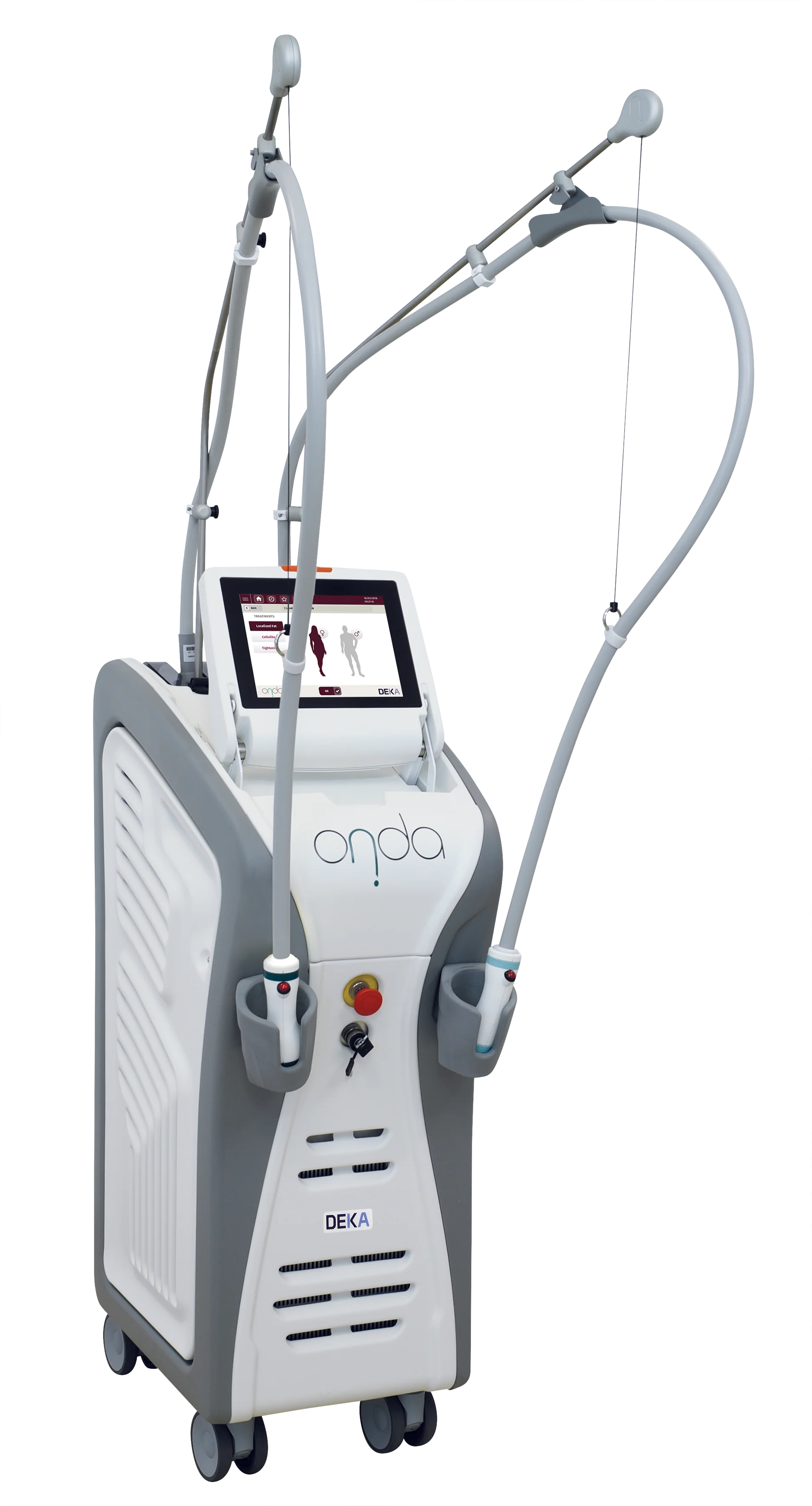
ONDA uses 2.45 GHz microwave energy. The handpiece cools the skin surface while delivering energy that heats tissue underneath. The area and how the energy is applied matter when interpreting a number such as 80 or 120 kJ. DEKA ONDA Plus
What has been studied for the area under the chin?
In a small study, 10 women received two submental treatments 30 days apart at 70–90 W. At the 12-week follow-up, the average laxity score decreased from 3.6 to 2.3. The study followed one group without a control group. It leaves open how different total energies compare and how results vary across treatment areas or over a longer period. Lasers in Medical Science
Frequently asked questions
Does a higher kJ number give a better result?
The number describes the device’s total output. Ask how the clinician decided on the area, handpiece and energy distribution for your goals.
How can I compare treatment options across clinics?
Ask which areas are included, which handpiece is used and how the power and total energy are set. If you are considering combining ONDA with another treatment, discuss the timing and the area each treatment is intended to address.
What should I mention before treatment?
Tell your clinician about skin inflammation or infection, recent treatment, pregnancy or breastfeeding, and any pacemaker, other implanted device or implant near the treatment area. Warmth, redness or swelling can occur afterward. Contact the clinic if you develop blisters or if pain or redness is getting worse. Aftercare
Explore ONDA · Book a consultation
WayB Clinic medical team